Medieval Art With One Color Background Medieval Art With 2dimensional
The Medieval Art period covers an immense range of time and place, equally information technology incorporates over 1000 years of art history within Europe. Having said to begin with the autumn of the Roman Empire and coming to a close by the early 14th century, Medieval Fine art was an incredibly influential period of Western art culture at the time. Due to its sheer span of time, many innovations and unique artifacts were made during the Medieval Art movement, with this artistic influence reaching Western asia and Northern Africa as well.
Table of Contents
- i What Is Medieval Fine art?
- 2 A History of Medieval Art
- 3 Early Medieval Art
- four Chief Divisions of Middle Ages Art
- 4.1 Early Christian Menstruum
- 4.2 Byzantine Period
- four.3 Romanesque Period
- four.4 Gothic Period
- 5 Medieval Architecture
- six Characteristics of Medieval Art
- half dozen.one Medieval Paintings
- 6.two Medieval Sculptures
- 6.3 Illuminated Manuscripts
- half dozen.4 Stained Drinking glass
- 7 Famous Medieval Artworks
- seven.1 Hagia Sophia (congenital in 537 A.D.)
- vii.2 The Lindisfarne Gospels (written between 715 – 720 A.D.)
- 7.3 Palatine Chapel (built between 790 – 805 A.D.)
- 7.4 Notre Matriarch de Paris (built between 1163 – 1345 A.D.)
- 8 Literature from Middle Ages Art
What Is Medieval Art?
Originating in Northern Europe later the Roman Empire collapsed, Medieval Art included some of the most major art movements and periods known to develop within art history. Influenced past the creative heritage of the previous Roman era and the iconographic customs of the early on Christian Church, the Medieval menstruation existed every bit an amalgamation of these creative heritages.
Due to this fusion of styles, Medieval Art essentially went on to produce some incredibly iconic artworks due to the distinct creative style that developed.
Due to the vastness of the Medieval Fine art menses, the movement can by and large be divided into a number of distinct periods and styles. These art phases have come to exist seen equally Early Christian Art, Byzantine art, Pre-Romanesque and Romanesque art, and Gothic fine art. In addition to these diverse styles, each region within Europe exhibited an artistic style in a very distinct way, meaning that some Medieval Art pieces varied greatly from region to region despite being created within the same time period.
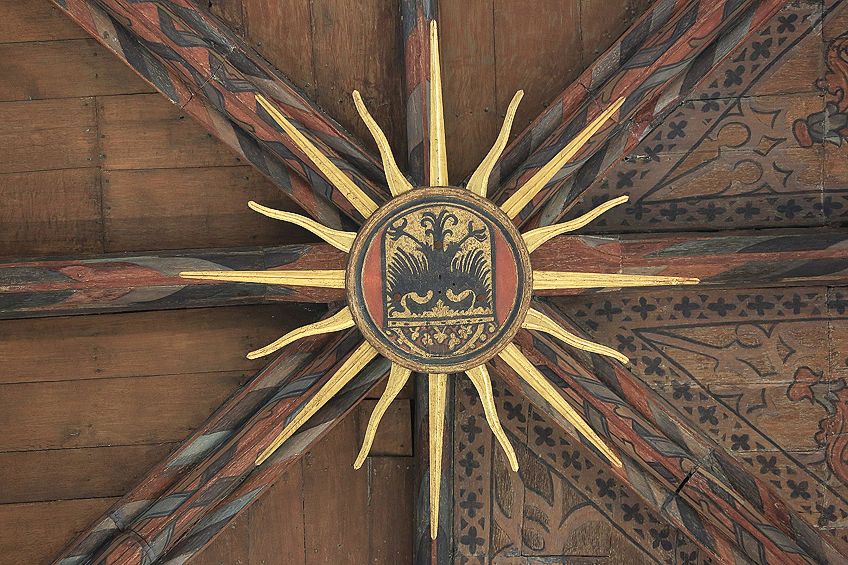 Painted wooden ceiling of the Oude Kerk (church building) in Amsterdam; Hans A. Rosbach/CC-By-SA iii.0, CC Past-SA 3.0, via Wikimedia Eatables
Medieval Fine art was made up of various creative mediums, such as sculpture, illuminated manuscripts, stained drinking glass, tapestries, mosaics, and metalworks. Numerous artworks were made using these different styles, which went on to have a higher survival charge per unit than other mediums like fresco wall paintings. However, in the early Medieval art menstruum, works that were more decorative and made use of things like precious metals, ivory carvings, enamel, and embroidery were thought to be more valuable than traditional paintings and sculptures.
Artworks created in the Medieval era became renowned for their utilise of valuable and precious materials, which went on to become a abiding feature of the catamenia. The Medieval Art era eventually came to an end with the emergence of the Renaissance period of art, which saw a recovery of the skills and values associated with classical art that had been scorned for some centuries.
Due to the achievements of the Medieval period, it has come to be regarded as an enormous developmental phase for hereafter Western art forms that later emerged.
A History of Medieval Art
Medieval Fine art inside Northern Europe grew out of the aesthetic heritage left past the Roman Empire. Afterwards its dissolution in 476 A.D., the menstruum leading up to the emergence of Medieval Fine art was seen as an incredibly determinative time in the continent's artistic history. Lasting until the early stages of the Renaissance in the 14th century, Medieval Fine art encompassed many various forms of media. Thus, the history of Medieval Art is said to be very expansive as the move lasted for numerous centuries and covered a wide range of genres.
Prominent in European regions, besides as the Centre Eastward and North Africa, the Medieval Art catamenia produced some artworks which are considered to exist the globe's most valuable pieces today. These artworks were predominantly featured in churches, cathedrals, and other sacred doctrines and places of worship. Artworks using gilded, such every bit gold leafage in religious manuscripts, was popular during the Medieval era, as the motility was greatly influenced by the early on stages of Christian art and the "barbaric" culture of Northern Europe.
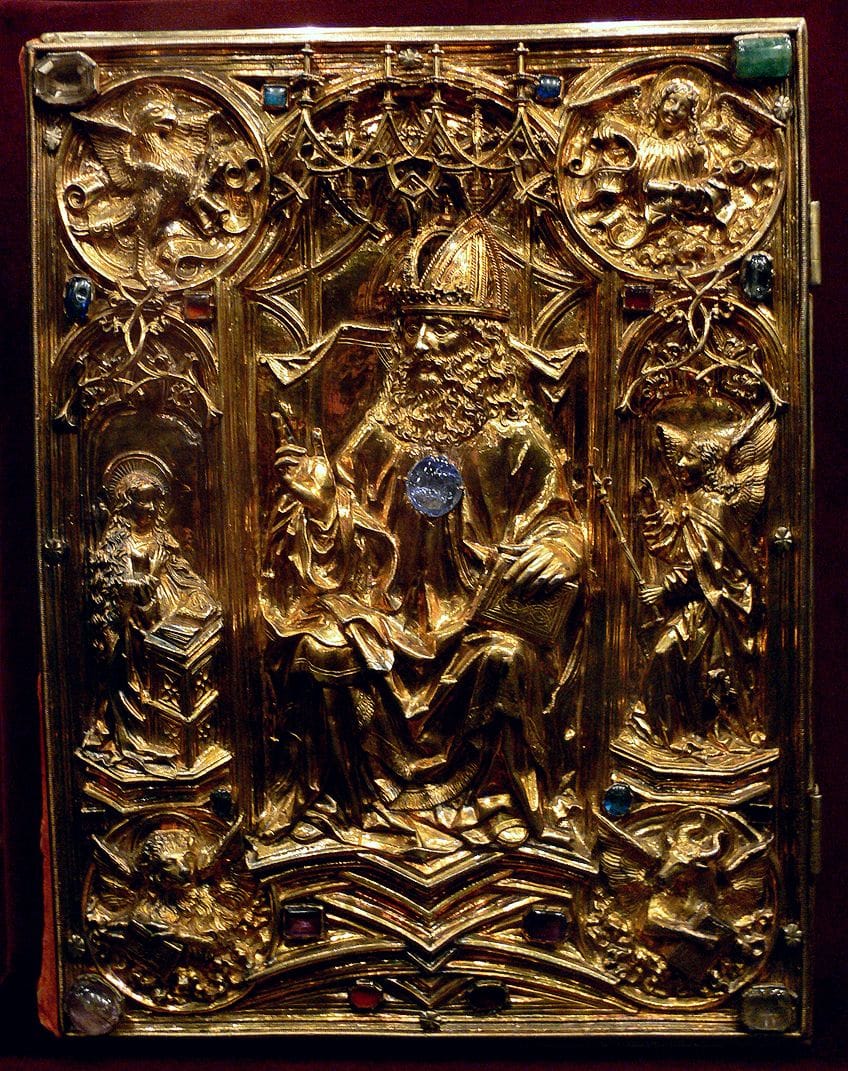 Book cover of the Coronation Evangeliar, role of the Regal Regalia of the Holy Roman Empire (HRE), past Hans von Reutlingen, c. 1500;Hans von Reutlingen, Public domain, via Wikimedia Eatables
The development of Medieval Art produced a diverse range of creative styles and periods, as the different artworks created were based on their location within Europe. Due to the variety of styles emerging, the Center Ages fine art period can generally be divided up into iii singled-out phases. These are the Byzantine Art era, the Romanesque Art era, and the Gothic Art era.
The majority of the art produced during the Medieval period was religious in nature and made use of Catholic subjects and themes.
Besides referred to equally the Middle Ages, the Medieval period was dominated past feudalism within society. Feudalism existed as the dominant social structure in Medieval order at the time, where nobles finer held command over and ruled all of the lands. Guild was fabricated up of the richest members and peasants, who were forced to respond to the nobles controlling their state.
The daily lives between these two social groups were thus vastly different, as the upper-grade experienced wealth, ability, and status, while the lower class were expected to serve others. Due to this, a stardom existed between the ii, which was but bridged by the presence of organized religion. This was why many individuals of the early Middle Ages were priests and monks in addition to being artists, every bit religion played a major role in daily life inside the Medieval menses.
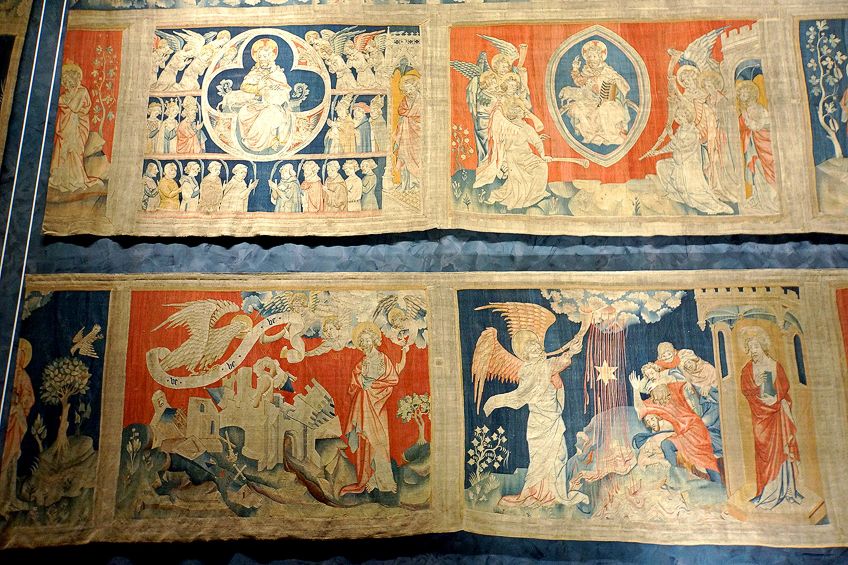 The Apocalypse Tapestry is the oldest surviving set of tapestries of this size, 100m (328ft). It was commissioned in 1375 by Louis I, Duke of Anjou and brother of King Charles 5. The tapestry took vii years to make and is made entirely of wool. Each piece starts with a major figure followed by two rows of seven scenes between a strip of sky and strip of earth;Dennis Jarvis from Halifax, Canada, CC BY-SA 2.0, via Wikimedia Commons
The early on Medieval art pieces that were created were used as the main method of communicating accounts of a Biblical nature to lodge, as a ascent in illiteracy during this time period was experienced. This resulted in the necessity for art to express complicated narratives and symbolism in a manner that was accessible to all of order. As a result of this, Medieval Art pieces became more stylized, as the genre lost the classical naturalism associated with the Graeco-Roman times for virtually of the movement.
Due to this lack of literacy, printed materials became increasingly available to monks and nuns who began to re-create illuminated manuscripts and so as to communicate with the masses, with these manuscripts becoming fine art forms themselves. Narratives of a Biblical nature were predominantly favored, as focus shifted from producing naturalistic images to beingness able to express circuitous stories. This also influenced the style of the motility as a whole, which began to lean towards the inclusion of abstracted figures inside much of early on Medieval Art.
Therefore, art produced within the Medieval period consisted mainly of architectural designs of churches, castles, and monasteries, in improver to paintings, sculptures, and manuscripts.
Medieval artists worked alongside achieved craftsmen such as carpenters, woodcarvers, masons, metal workers, sculptors, and painters when applying ornamental features to their artworks. These works influenced artisans of lesser-known arts, like blacksmiths, locksmiths, shoemakers, and weavers, who imitated the Medieval fashion in the objects they manufactured.
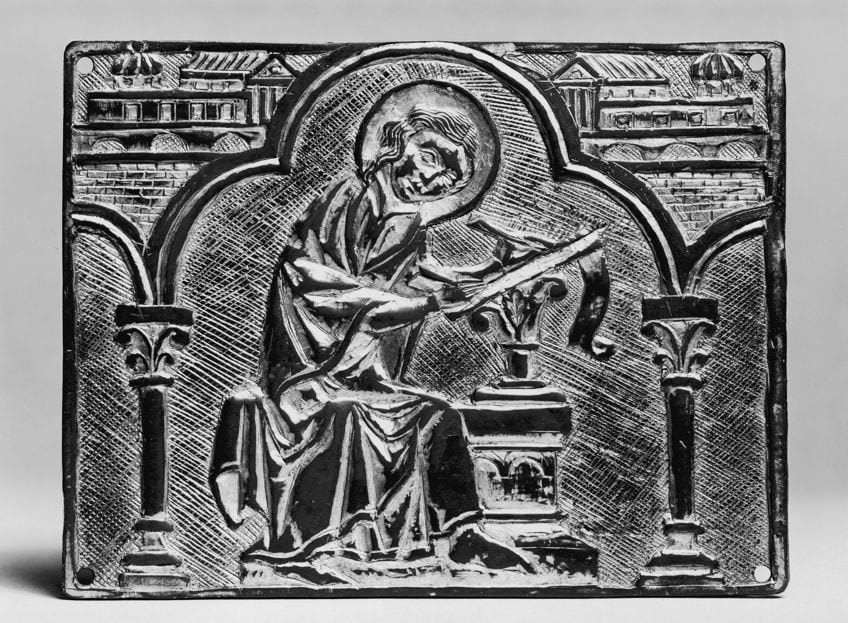 Reliquary Plaque of an Evangelist.This bas-relief engraved plaque depicts an evangelist seated inside an arcade. Information technology was part of the 13th-century redecoration of the 11th-century "Saint Amandus Shrine";Walters Fine art Museum, Public domain, via Wikimedia Eatables
What made the Medieval Art period and then important was that it was not purely artful, but information technology too existed as a symbol that alleged one's status, identity, education, and culture. Thus, the major societal, cultural, and artistic changes that occurred in Europe equally the Medieval menstruum adult went on to further ascertain the artworks produced during that time. While the movement neither began nor ended at a precise engagement, the terminate of Medieval Fine art was thought to be signaled by the changes in art that accompanied the first of the Renaissance period.
As the menses generated a large quantity of fine art that was seen to be historically significant, the Medieval era continues to be a significant surface area of report for fine art critics, students, and collectors. The accomplishments of artists during the movement accept gone on to greatly influence the development of modern genres of Western art that accept since emerged.
Thus, it tin can be said that the Medieval Fine art period exists as one of the most significant fine art movements in history.
Early Medieval Art
The period of time that has been classified as early Medieval Art is quite complicated, every bit it includes artworks that range from the fivethursday century CE all the manner through to one thousand CE. In addition to this, early Medieval artworks demonstrate a various cultural influence, which combined classic Greek and Roman artistic components with Christian subject matter and decorative designs taken from the pagan Due north.
At the time of the emergence of early on Medieval Fine art, the Catholic church and other wealthy patrons began to commission projects for detail social and religious ceremonies. Medieval artists were required to create artworks that featured Biblical tales and classical themes for churches, while the insides were intricately adorned with Roman mosaics, elaborate paintings, and marble incrustations. Due to the religious influence, many of the oldest examples of early Medieval Art remain in Roman catacombs or burials beneath cities.
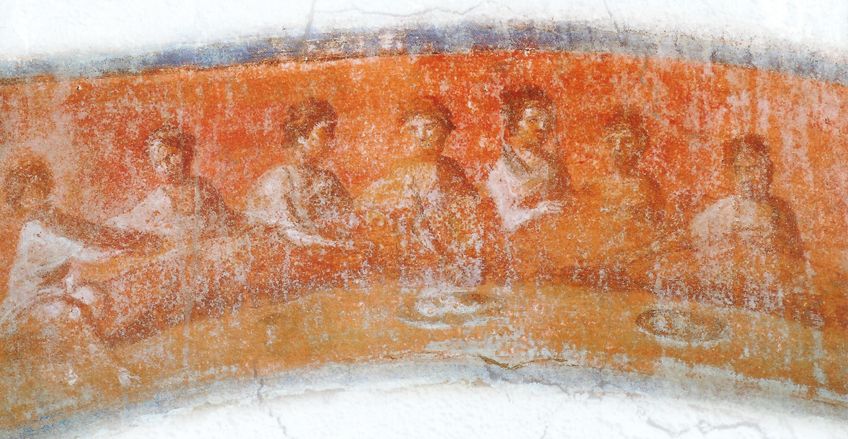 Fresco of a Christian Agape banquet showing the fractio panis , the breaking of the bread during the meal of Holy Communion. Greek chapel, Catacombe di Priscilla, Rome. 2d – 4th century;Unknown author Unknown author. Photographer: André Held, akg-images., Public domain, via Wikimedia Eatables
Many artistic styles that existed before the emergence of early Medieval Art continued to be referred dorsum to for inspiration. A popular art form that was used as the Medieval period progressed was the creation of relief sculptures. These sculptures were influential, as they stood out from their backgrounds to create a three-dimensional effect. Medieval artists used ivory as their primary medium and sculpted complex designs on volume covers, caskets, panels, doors, and devotional items.
Another artistic class that artists continued to conserve were frescoes and mosaics, which were used to decorate churches and palaces. Both of these mediums were intricately designed and were used to portray Christian saints and scenes, such equally the Blessed Virgin Mary and the ascent of Jesus. A vast lack of realism accompanied these creations, with fresco paintings appearing to be specially apartment in style with incredibly somber subjects.
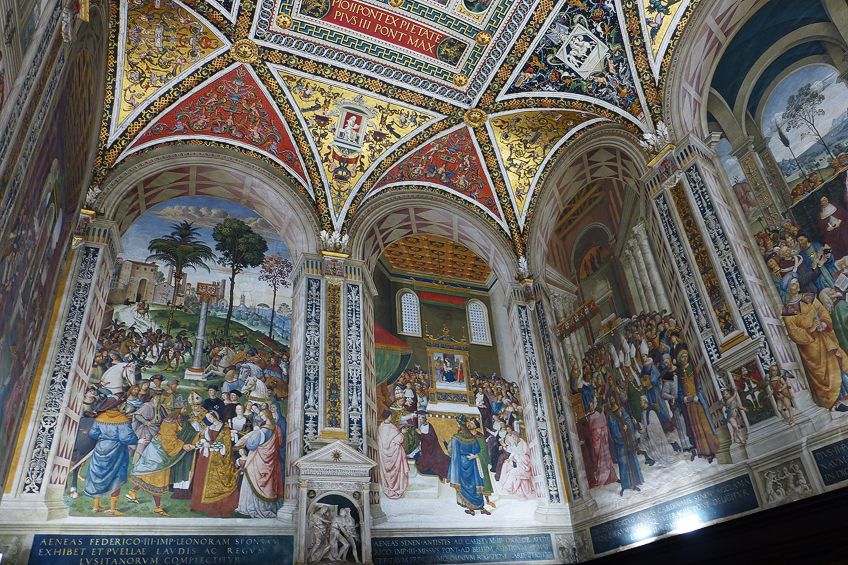 Duomo di Siena (Siena Cathedral), a medieval church in Siena, Italian republic, defended from its earliest days equally a Roman Cosmic Marian church building, and now defended to Santa Maria Assunta (Holy Mary, Our Lady of the Assumption);Chenspec, CC Past-SA 4.0, via Wikimedia Commons
Churches and palaces that were decorated using both relief sculptures, frescoes, and mosaics became a common sight in the early Medieval Art earth. While the blueprint of these buildings remained predominantly Roman, the artistic way had a definitive Christian influence.
However, while early Medieval Art preserved some forms and techniques from the past, such equally stylistic elements taken from the Classical globe, the movement also began to develop new forms and styles that went on to permanently change the art world.
Primary Divisions of Center Ages Fine art
The Medieval Fine art period lasted for ten centuries and covered an enormous scope of time and identify, which meant that many different styles and forms of fine art were experimented with and included. Equally religion and faith were seen every bit the style of life during the Centre Ages, artworks that were created expressed various social, political, and historical events through the building of churches in most European towns.
Mostly, Medieval Art is divided up according to the distinct types of artworks that were created, which were expressed differently in different regions and at unlike times. These separate art periods have collectively been agreed on to be the Early on Christian flow, the Byzantine menses, the Romanesque period, and the Gothic menstruation.
Early Christian Period
As early Medieval Art began to develop, religion and Christianity proved to exist major influences of the movement. The majority of the artworks contained holy and spiritual references, as the subject area thing tended to portray Biblical scenes. To some extent, countries bordering the Eastern Mediterranean region helped the Early Christian period of art in its evolution. However, the main area where this period of art emerged was fundamental Italia.
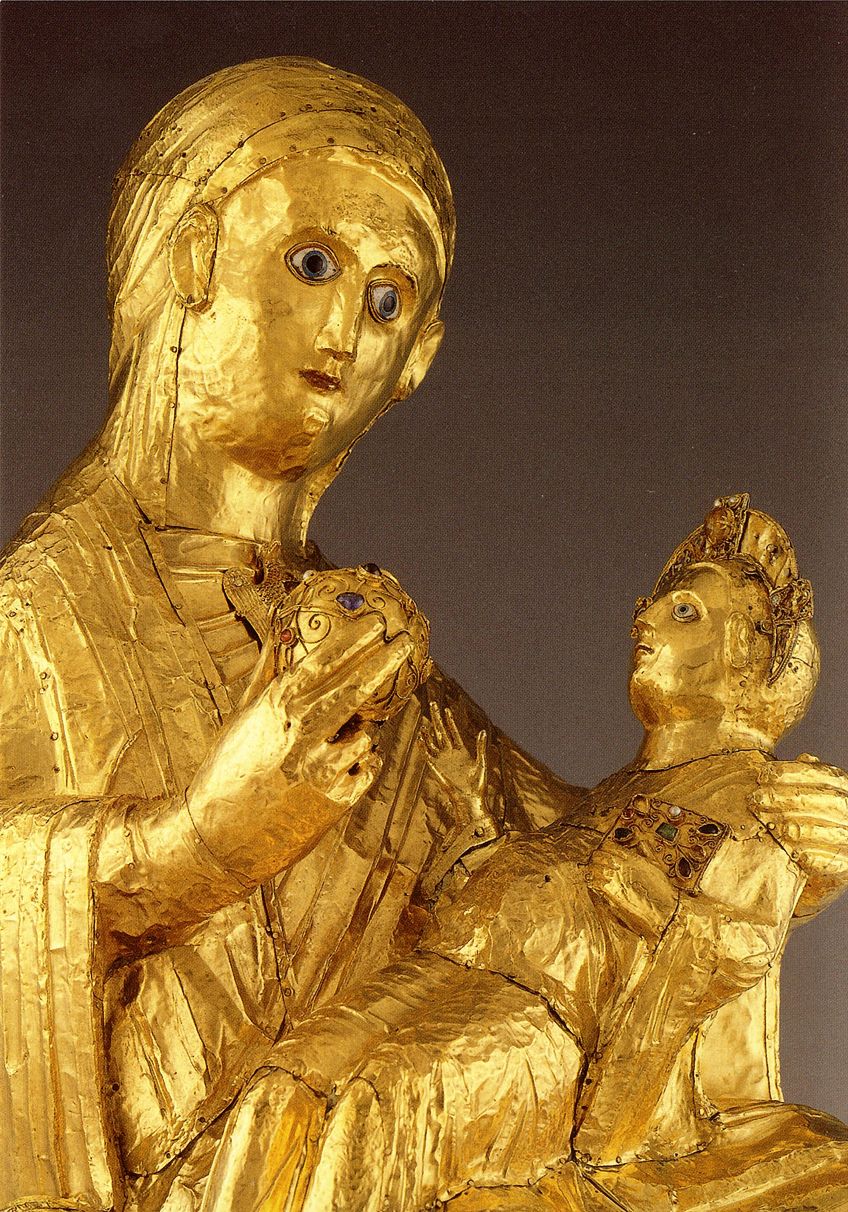 Particular of the Golden Madonna of Essen, 990 A.D.; Martin Engelbrecht, CC By-SA 3.0, via Wikimedia Commons
Early Christian art forms adult after the Roman Empire officially adopted Christianity as their ruling religion. Around the 4th century, Christian art grew in popularity as pictures of Christ became more common. Concerns existed effectually creating images of the Deity began to grow, with more Medieval artists commencement to create scenes that depicted Jesus and other religious figures.
Sadly, as the Early on Christian art menses appeared at the starting time of the Medieval Art era, very few sacred artworks and designs accept managed to survive the first three centuries of Christian fine art. Near of the Early Christian artworks that exist today, such every bit iconic paintings, come from catacombs. Despite this, some examples of Early Christian architecture remain, every bit numerous churches were constructed during this period of fine art.
Byzantine Period
Developing in Constantinople, the capital letter of the Roman Empire at the time, was the Byzantine period of art. The beginning of the Medieval era was considered to be the Nighttime Ages, with Byzantine art existing equally the chief blazon of art used by artists from the Eastern Roman Empire. The Byzantine fine art period is oft considered to brand up the best artworks that were created during the Middle Ages due to the impeccable craftsmanship and quality of materials used.
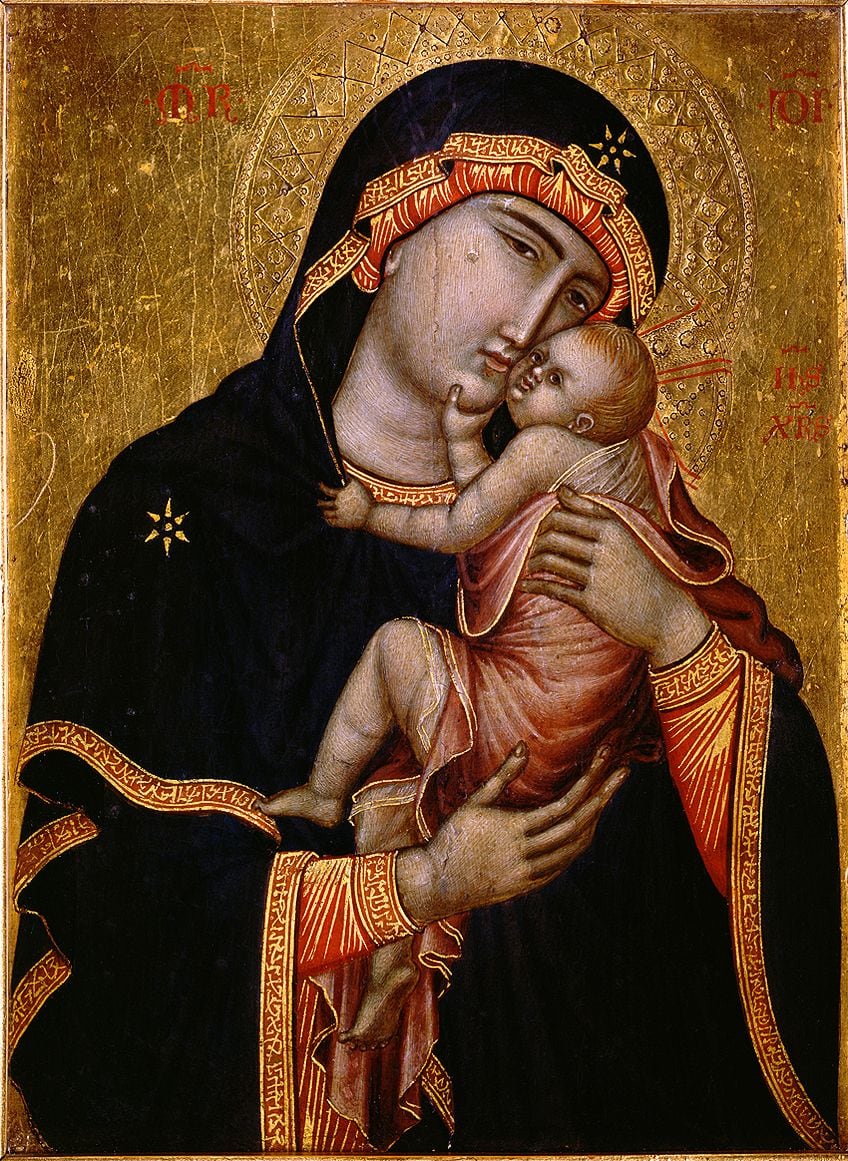 Cambrai Madonna (c. 1340);Cambrai Cathedral, Public domain, via Wikimedia Eatables
Byzantine art, which was made up of a combination of Roman and Oriental arts, was characterized by its complete lack of realism. Artists did not attempt to make their paintings seem realistic, as they instead concentrated on the symbolism that was nowadays in their artworks. Thus, the paintings produced were incredibly apartment with no shadows, with subjects that appeared to be very serious and grim.
The majority of the subjects within Byzantine art were religious, with many Medieval paintings being depicted of Christ and the Virgin Mary.
Architecture during the Byzantine menstruation was typically grandiose and dazzling, as buildings demonstrated the wealth and intellectual prowess of their designers, artists, and builders. This is why churches congenital during the Byzantine period were magnificent, as they represented the dominating religion of Christianity in addition to these qualities. Unfortunately, well-nigh of the artwork created during this period has since been destroyed, along with the exquisite mosaics and fresco paintings that adorned the churches.
Romanesque Period
Beginning with a phase that was known as pre-Romanesque fine art, the Romanesque catamenia developed around 1000 A.D. and was influenced past both the Romans and Byzantine fine art. The Romanesque catamenia placed its focus on religion and Christianity, with these influences existence seen in the artworks that were created. Typical Romanesque art pieces included stained glass pieces, engravings on buildings and columns, big murals on walls and domed ceilings, illuminated manuscripts, and sculptures.
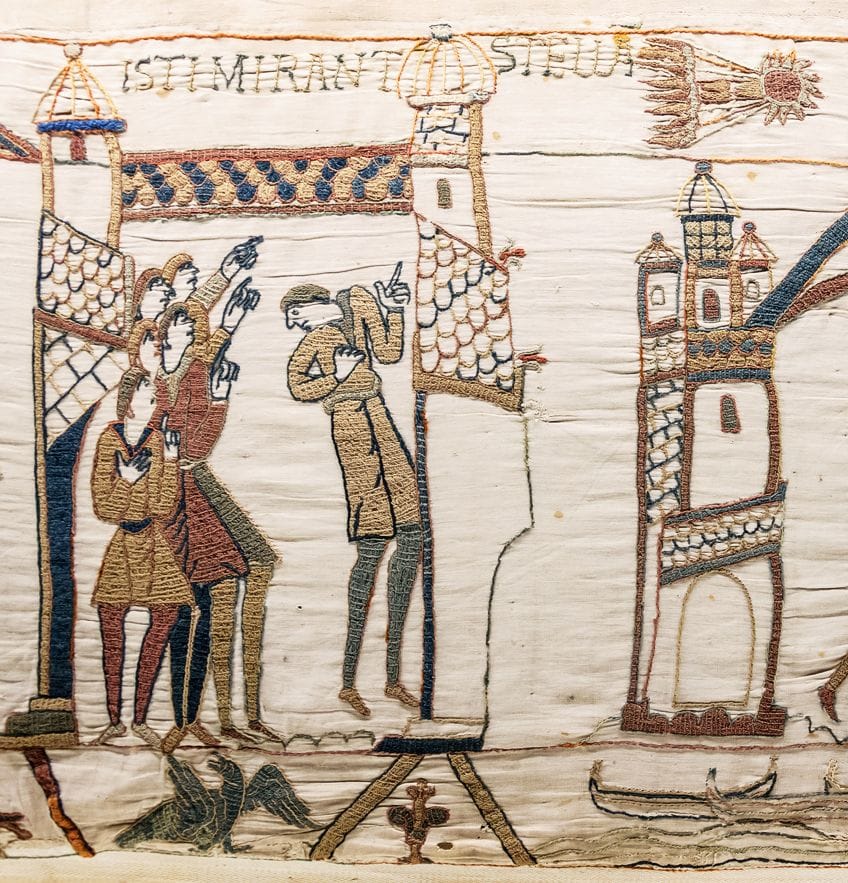 Bayeux Tapestry (1070s), scene 32 – men staring at Halley's Comet;Myrabella, Public domain, via Wikimedia Commons
Romanesque buildings were enormous, powerful, and foreboding in appearance, but were characterized by their unproblematic surface adornments that showcased the simplistic way of life of the artists. Structural forms during this period were based on artists' basic interpretations of Roman architecture, every bit the elements and characteristics present in this art menstruum were taken specifically from ancient Rome. This stylistic influence was why the era was dubbed the "Romanesque" period.
The styles utilized by the Romanesque period were developed in France before they spread to other Western regions such as Spain, Germany, and Italian republic. Information technology existed as the foremost art mode to disperse throughout Europe, which demonstrated the increasing abundance of European cities and the authority of church monasteries. The Romanesque style eventually made its way over to England where it became known every bit Norman art and continued to develop until the emergence of the Gothic Art menstruum.
Gothic Menses
The last menses of late Medieval Art was the Gothic art flow, which began developing in the 12th century. Growing out of Romanesque fine art, the Gothic period emerged when the Abbey Church of Saint-Denis in France was being renovated. The style began to grow in popularity and spread all over Europe, eventually replacing Romanesque art entirely.
Gothic fine art was characterized by the use of brighter colors, dimensions, and perspective, as it demonstrated a pointed move back towards realism.
Artists began to apply more shadows and light in their artworks and experimented with broad and new subject matters. Religion was dropped as the almost important element within art, as these new discipline matters included animals and mythic scenes. Figures depicted within the Gothic period made apply of more realism, as paintings became more lifelike.
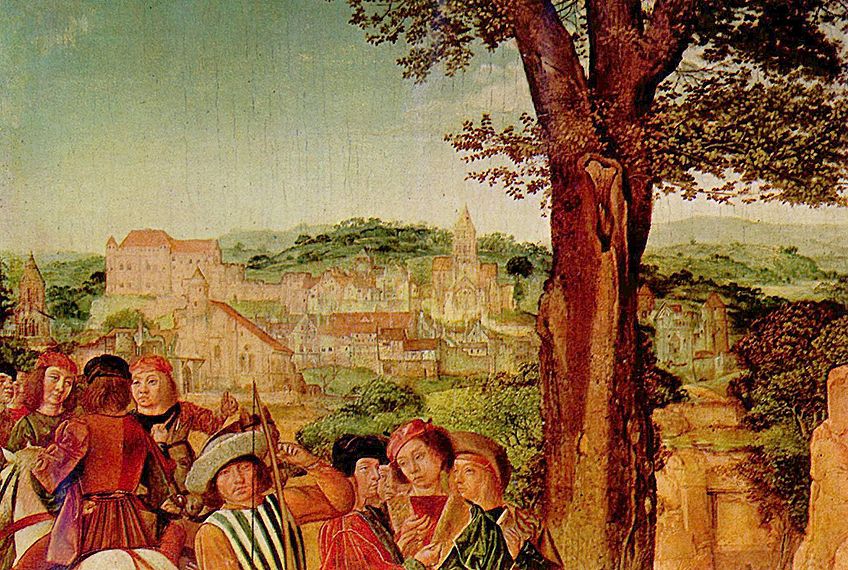 St. Aegidius and the Hindu (c. 1500) past Master of St. Aegidius;National Gallery, Public domain, via Wikimedia Commons
Every bit cities began to expand, the rise in universities, trade, and creation led to the germination of an entirely new form who could of a sudden afford artistic commissions. This ultimately allowed Medieval artists to explore more than earthly and non-religious themes and bailiwick matters in their artworks. Gothic architecture presented some revolutionary structural advancements to buildings, which were used to create taller and lighter buildings.
Similarly, sculpture within this era borrowed elements from architecture and was mainly used to decorate the facade of cathedrals and other religious buildings. Gothic art somewhen morphed into the Renaissance period, as elements began to mix together equally the artistic period changed.
Medieval Architecture
During the Medieval Art period, architecture formed an important role of the artistic developments. The Centre Ages was an era where political social club was practically non-existent, which left many common individuals with no promise in their lives and very little to live for. The only certainty that existed was the promise of peace in heaven, where happiness and promise would finally be experienced.
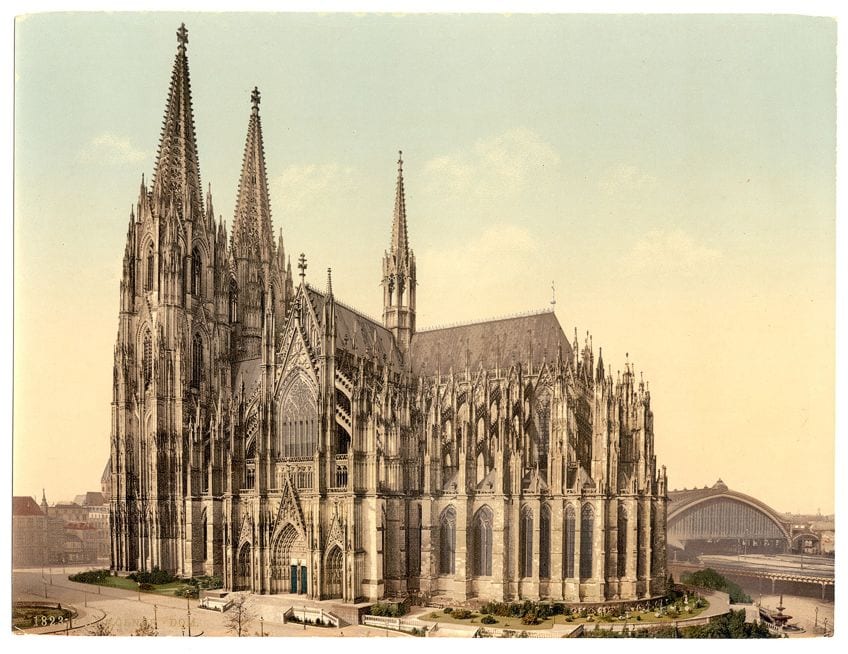 The cathedral, side, Cologne, the Rhine, Germany;Run into page for writer, Public domain, via Wikimedia Commons
The influence of religion led to churches being designed by members of the public as opposed to the clergy, which allowed these holy places to run into the requirements of the daily lives of its members. Thus, churches during the Medieval era took on the role of libraries, museums, and movie galleries in addition to beingness places of worship.
This led to churches becoming the center of town life within the Medieval menstruum. The architectural designs of this time illustrate the deep passion and idealism of the Christian and Catholic organized religion, which was represented in the churches built.
These buildings existed as a direct expression of the spirituality of gild at the time, with the interior décor demonstrating the eager annunciation of the deep religious faith of the people during the Middle Ages.
Characteristics of Medieval Art
Due to the vastness of the Medieval catamenia, many different types of mediums were experimented with. The artworks that even so remain in large quantities include sculpture, illuminated manuscripts, tapestries, metalwork, stained glass, and mosaics. These art forms were all said to have higher survival rates than fresco wall paintings and works made out of precious metals, despite them beingness extremely popular during Medieval Art. Below, we will talk about some of the most pregnant mediums of Medieval Art and their characteristics.
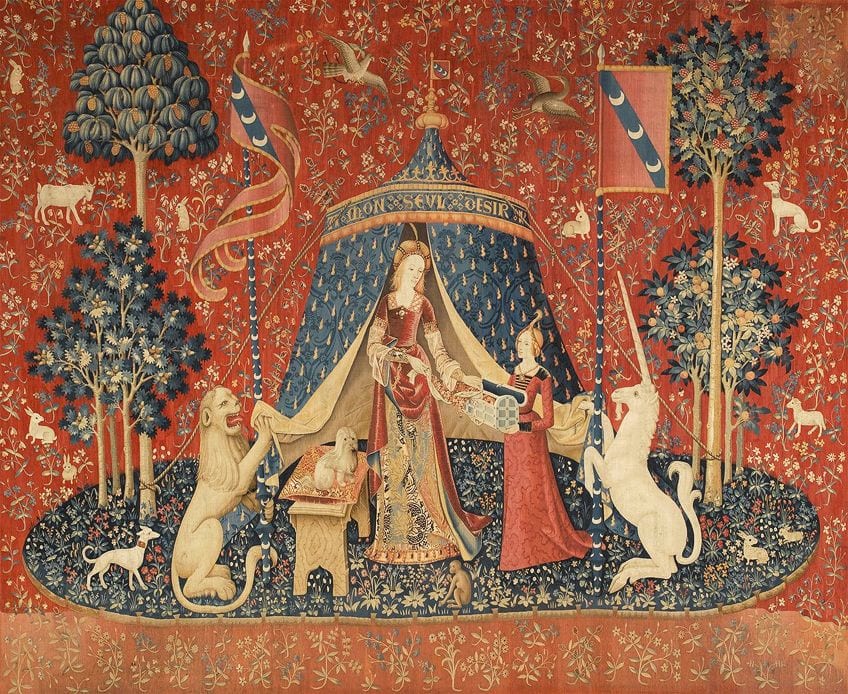 La Dame à la licorne(The Lady and the Unicorn), also called the Tapestry Cycle, is the title of a series of six Flemish tapestries depicting the senses. They are estimated to have been woven in the late 15th century in the manner of mille-fleurs;Unknown author Unknown author, Public domain, via Wikimedia Eatables
Medieval Paintings
During the Middle Ages, organized religion went on to become a prevalent theme in the bulk of the artworks that were produced. Vibrant paintings that featured famous icons, such as Jesus and the Virgin Mary, were common during the early on stages of the Medieval period. One of the most iconic religious paintings created during this time was Last Supper by Giotto di Bondone, painted in 1306. This painting portrayed Jesus surrounded by his apostles, which went on to get the nearly depicted religious scene in art history.
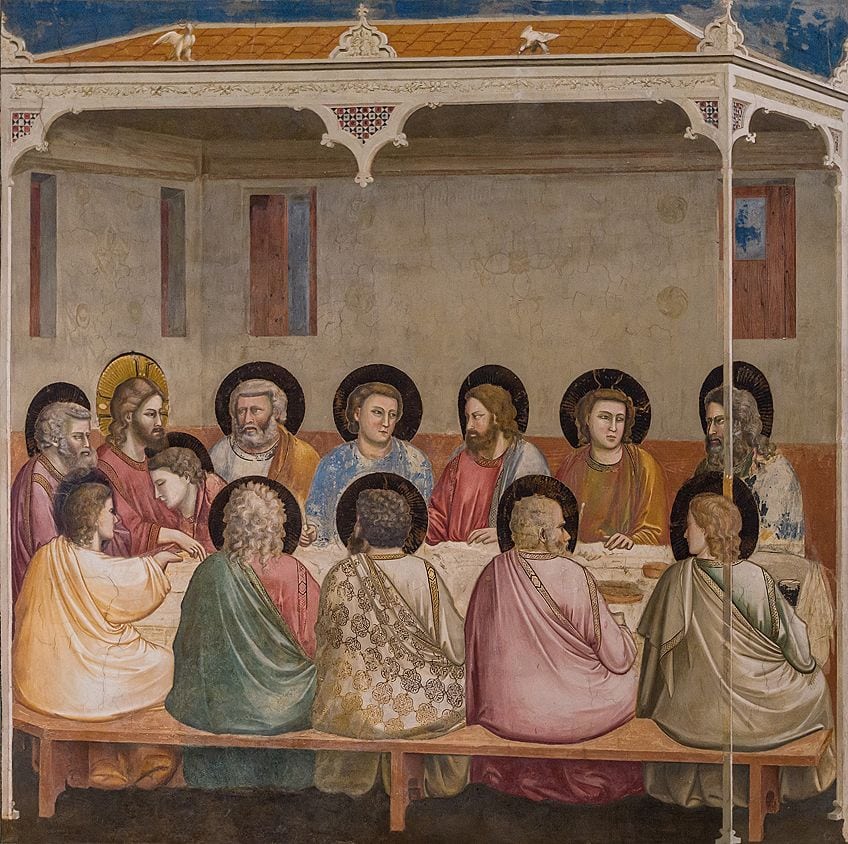 Concluding Supper (1304-1306) by Giotto di Bondone;Giotto di Bondone, Public domain, via Wikimedia Commons
However, by the time the Gothic fine art period came effectually, artists began to stray away from the inclusion of typical religious themes in their artworks. This meant that the subject matter began to change, along with the fine art manner, as paintings started to focus on mythology, animals, and diverse other themes that differed from the norm. Ane particular artistic element that artists began to adopt within their artworks was realism, which became an of import feature in the paintings created during the Medieval stage.
Medieval Sculptures
The inclusion of realism besides featured inside the Medieval sculptures that were created. Prior to the fall of the Roman Empire, sculptures were traditionally stylized in their features. Afterwards the empire collapsed, realism was ushered in by the Ottonians and Carolingians, who emphasized the use of realistic aesthetics over the apathetic expressions that were used in periods such as the Byzantine era.
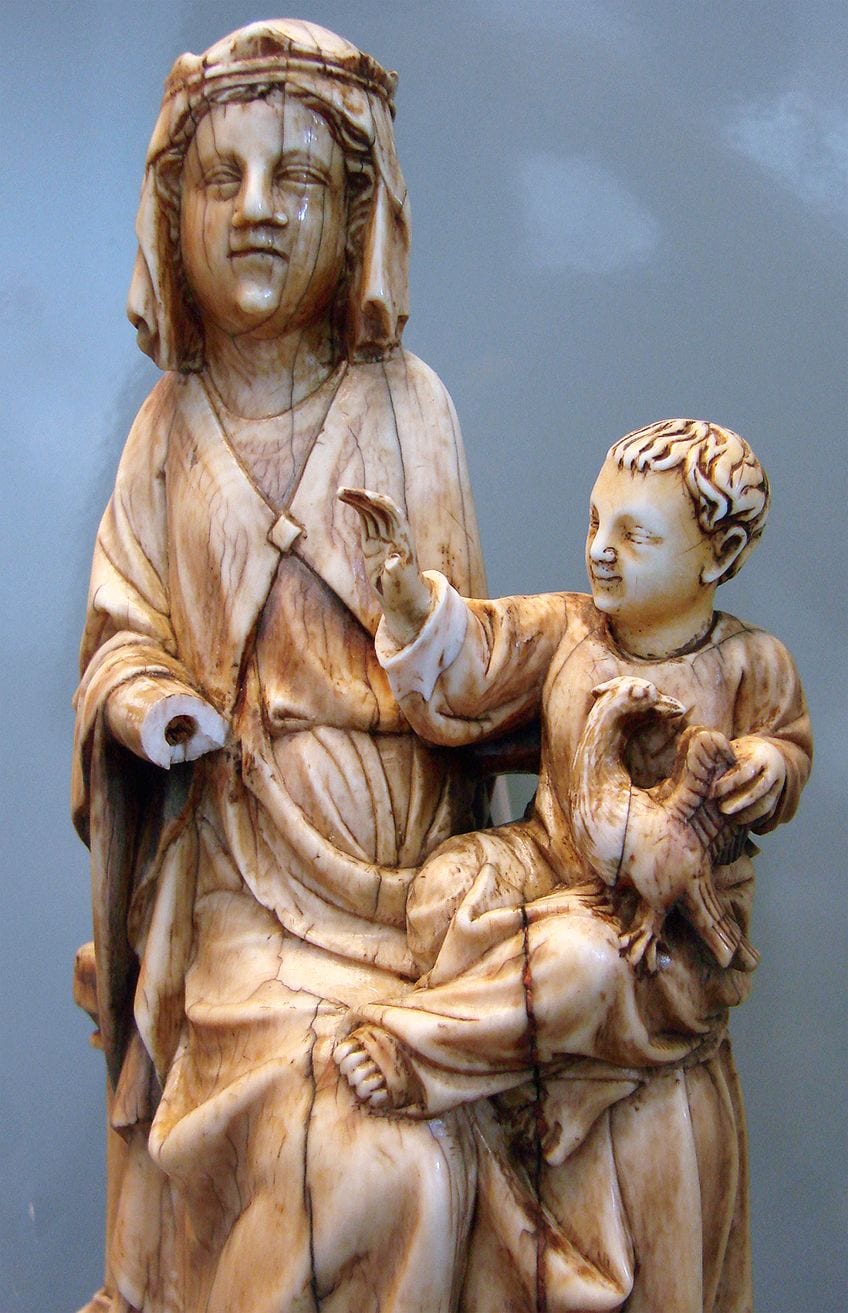 Virgin and Child, ivory, kickoff one-half of the 14th century; Vassil, Public domain, via Wikimedia Eatables
This transition into realism began a significant period of cultural revival within Medieval Art. Exquisite ivory carvings began to re-emerge, along with bronze castings that had three-dimensional details. These sculptures were influenced past classical realism that had exceeded previous fine art movements and had found expression during the Medieval stage.
Due to the vastness of Medieval Art, many styles and types of sculpture came and left, which accounted for the different architectural sculptures found within the Romanesque and Gothic periods.
Prominent Medieval sculptures included the figures that decorated the outside of famous churches, also as carvings of the Virgin Mary. The size of sculptures also denoted the wealth of individuals, with total-scale alabaster tombs existing as signs of excessive affluence, while smaller ivory sculptures were seen as merely devotional objects.
Illuminated Manuscripts
An art form that rose in popularity during the Medieval era was illuminated manuscripts, which featured documents of adorning text and ornamental objects. In the art archives today, the bulk of the surviving illuminated manuscripts come from the Medieval phase of fine art.
The creation of illuminated manuscripts was an expensive and complicated process, as it began with writing the text onto sheets of parchment paper. Once this was completed, a lengthy stage of planning began, whereby the blank spaces inside the layout were used for ornament. Inside the final step, stunning figures were painted onto these pages and frequently made use of gold, which was a favored color in the earliest manuscripts that were created.
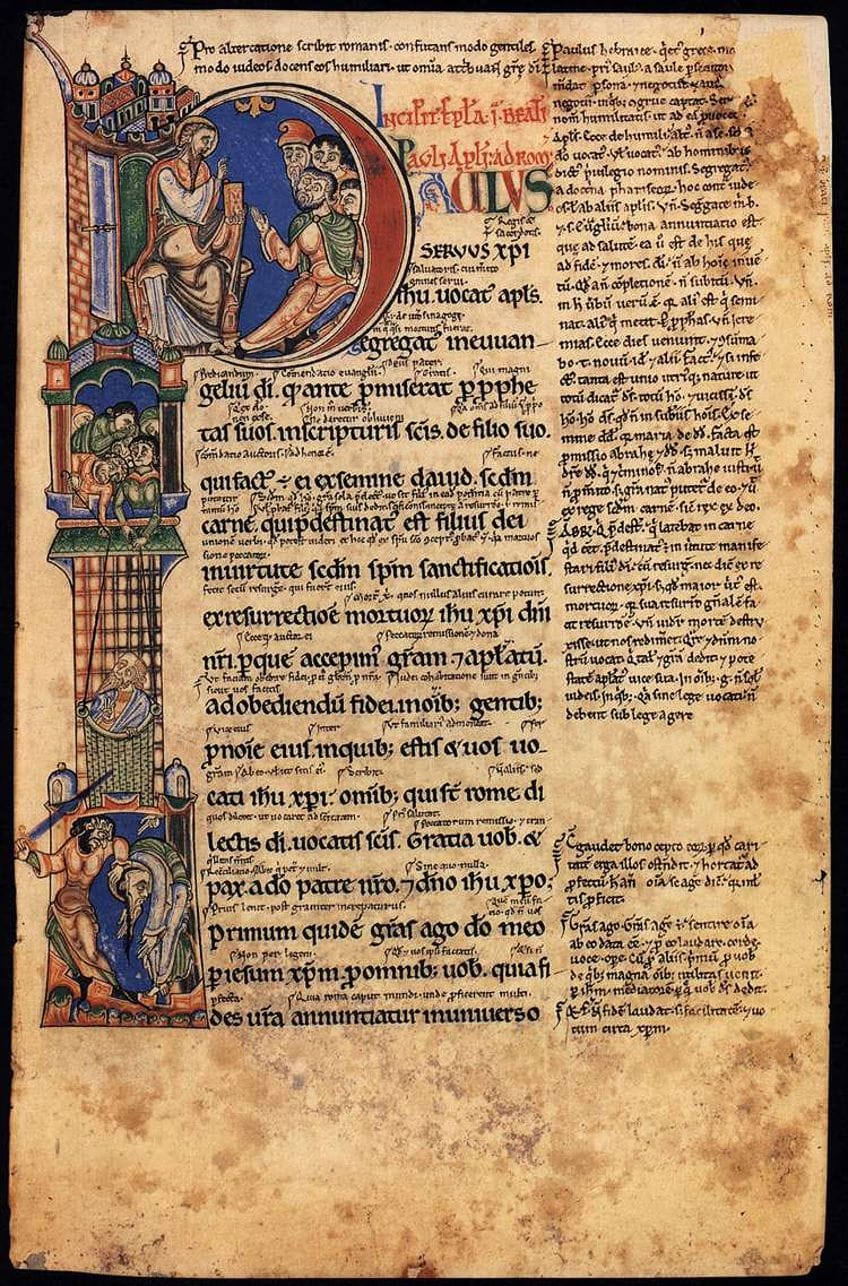 Epistles of St Paul with Gloss (c. 1150), illumination on parchment;Bodleian Library, Public domain, via Wikimedia Eatables
Due to the vast development of illuminated manuscripts, a unique way that emerged was the creation of the historiated letter of the alphabet. This was an enlarged, oftentimes decorated alphabetic character used at the start of a paragraph and other sections of text that typically contained a picture. This was first seen in Insular Art before becoming increasingly popular during the Romanesque menses.
The production of illuminated manuscripts had a keen influence on the evolution of art, with these decorative initials beingness seen in antique-inspired books of myths and legends today.
Stained Glass
Another stunning type of fine art that was prevalent during the Medieval era was the art of stained glass. This fine art form was created by mixing sand and wood ash together before melting information technology into a liquid so that information technology molded into a glass. Before the glass had hardened, powdered metals were added which created the beautiful colors seen in the glassworks that later decorated great cathedrals.
The colors, while incredibly vibrant, depended on the type of stain and ingredients used just no matter the mixture, breathtaking scenes of wonder were always guaranteed. These stained-drinking glass masterpieces were incredibly time-consuming, as different pieces of glass were carefully arranged together before deciding on the terminal pattern and design.
Artists then added terminal details by paw before putting together the finished artwork and attaching it into a window. Religion was as well an important theme within the creation of these stained-glass designs, as they were essentially used to adorn the windows of churches and cathedrals with beloved icons from the Bible.
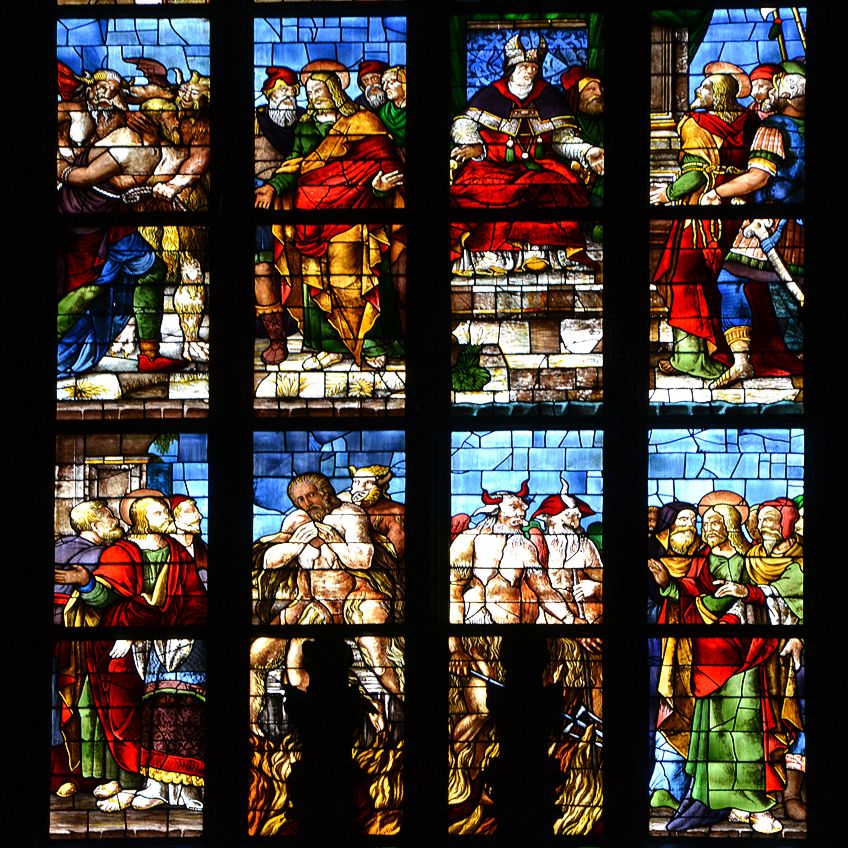 The stained glass window with the Stories of San Giacomo Maggiore, by Corrado de 'Mochis from 1554-1564. It was deputed by Pius IV of the Medici di Marignano;Carlo Dell'Orto, CC Past-SA 3.0, via Wikimedia Commons
Famous Medieval Artworks
As the Medieval Art period was ane of the oldest fine art periods to occur, many early on Medieval art and their artists remain unknown to u.s.. The artworks that have survived throughout the centuries, most notably sculptures and architecture, belong to artists who produced what was considered to be late Medieval art. Additionally, the near notable artists that are spoken nearly today lived during the latter part of the Medieval menstruum and are thought to overlap with the starting time of the Renaissance.
Every bit nearly of the fresco paintings did not survive after the end of the Medieval era, we will be exploring some of the most notable architectural structures to come from this menses of artistic creation.
Hagia Sophia (built in 537 A.D.)
Built at the beginning of the Byzantine flow within Medieval Art, under the management of Roman emperor Justinian I, the Hagia Sophia was the largest Christian church in existence within the Eastern Roman Empire. Originally congenital equally a Greek Orthodox Christian church, the Hagia Sophie was converted into a mosque in 1453 after the fall of Constantinople to the Ottoman Empire. Today, the Hagia Sophia exists as a museum in Istanbul, Turkey.
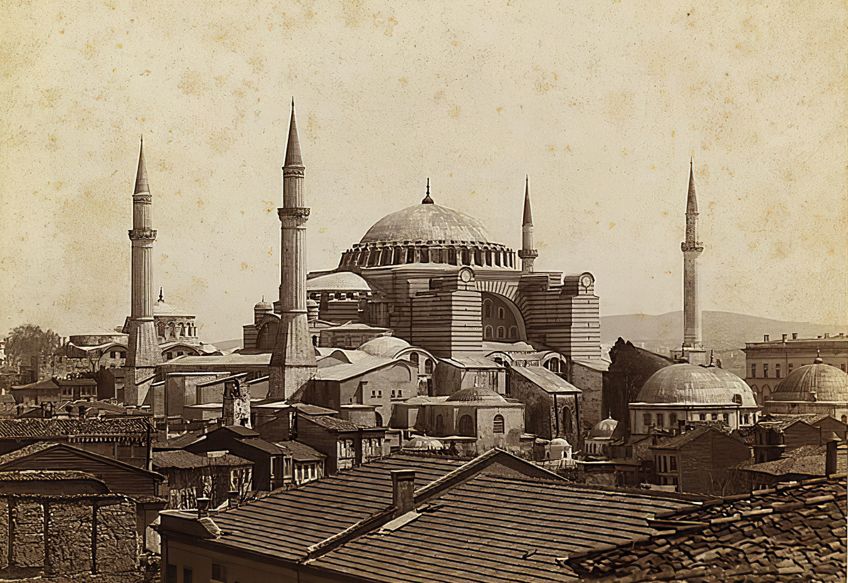 A photograph of the Hagia Sophia, built in 537 A.D.;Ali Rıza Paşa, -1907, photographer, Public domain, via Wikimedia Commons
Due to its structural design, the Hagia Sophia is believed to be the paradigm of Byzantine architecture, every bit information technology is also one of the greatest surviving architectural examples from this menses. At the time of its construction, it was considered to exist the world's tallest building and was well-known for its distinctive and massive dome, as it was the first church building to e'er make employ of a fully penetrative dome.
The interior of the structure was originally decorated with rich mosaics and marble pillars that held great artistic value. Being seen every bit a keen accomplishment of late artifact, its architectural and eucharistic influence spread throughout both Eastern and Western Christianity and Islam. Today, the Hagia Sophia is a UNESCO World Heritage Site.
The Lindisfarne Gospels (written between 715 – 720 A.D.)
Existing as one of the greatest examples of Insular Art, the Lindisfarne Gospels is an illuminated manuscript gospel book that was written in a monastery in Lindisfarne in North Eastward England. This manuscript, which blends Anglo-Saxon, Celtic, and Mediterranean elements, is fabricated up of the iv Christian gospels, Matthew, Luke, Mark, and John.
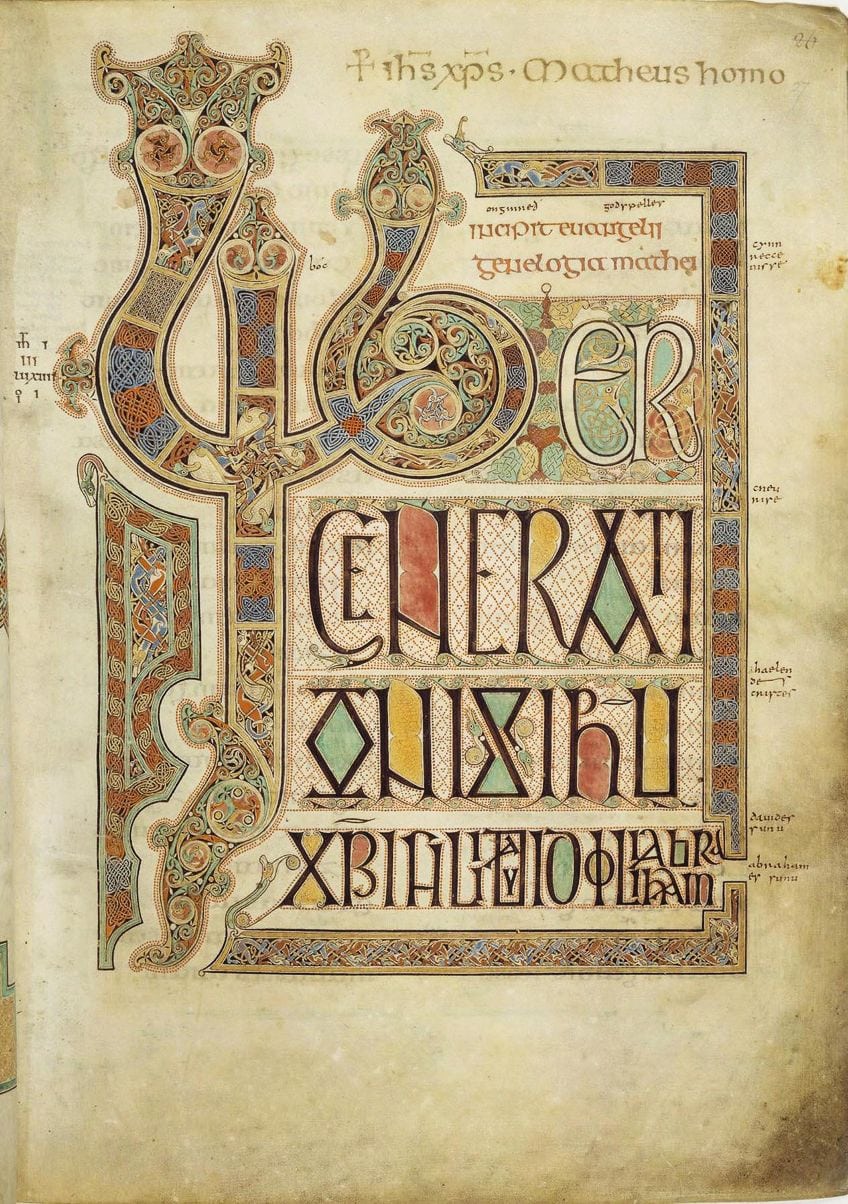 Folio 27r from the Lindisfarne Gospels, incipit to the Gospel of Matthew. The principal text contains the start judgement of the Gospel According to Saint Matthew: "Liber generationis Iesu Christi filii David filii Abraham" ("The book of the generation of Jesus Christ, the son of David, the son of Abraham");Eadfrith of Lindisfarne (presumed), Public domain, via Wikimedia Commons
Supposedly mimicking St. Jerome'southward Latin translation of the Bible, the Gospels recount the life and teachings of Christ. The manuscript is seen as a not bad instance of Medieval European bookmaking, as it was richly illustrated and originally encased in a fine leather bounding that was covered with precious jewels and metals.
Palatine Chapel (congenital betwixt 790 – 805 A.D.)
Located in Federal republic of germany, the Palatine Chapel was a Medieval chapel that was consecrated by Pope Leo III in 805 A.D. to award the Virgin Mary. It existed as the outstanding piece of Charlemagne's Palace of Aachen. While this palace no longer exists today, the preserved chapel at present forms part of the Aachen Cathedral. Seen equally an early example of Classical, Byzantine, and Pre-Romanesque art, equally the architecture combined elements of all three periods, the Palatine Chapel is an exemplary vision of Middle Ages fine art.
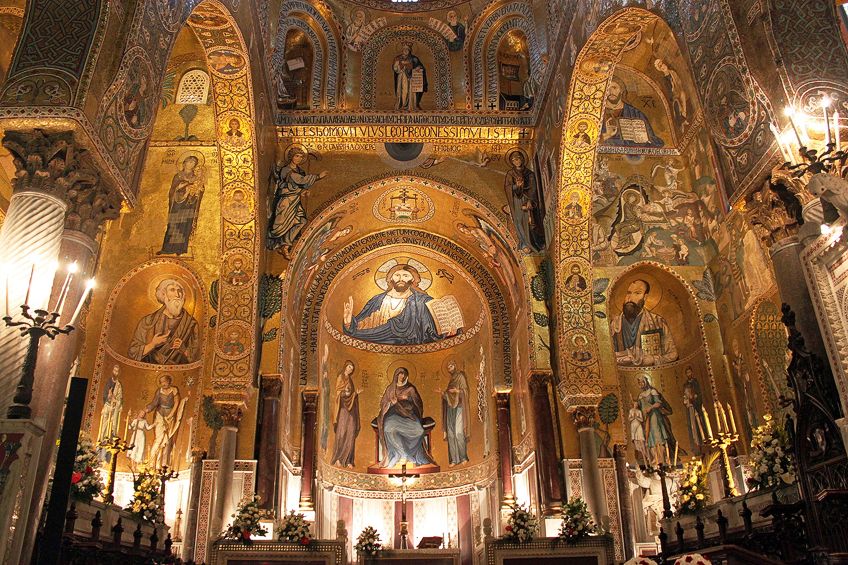 A photo of the exterior of Capella Palatina. Palermo, Italy;Liilia Moroz, CC By-SA four.0, via Wikimedia Eatables
The edifice was made up of a dome chapel with a square apse and two basilican structures that are only known through archeology, as the original structures have sadly been destroyed. The construction of the dome, which resembled an octagonal cloister vault, borrowed heavily from the Roman period of fine art through its techniques. Like other structures created in the Medieval period, the Palatine Chapel was designated as a UNESCO World Heritage Site, as it also at present forms part of the Aachen Cathedral.
Notre Dame de Paris (built between 1163 – 1345 A.D.)
Mayhap the most well-known Gothic cathedral in existence is the iconic Notre-Dame de Paris, which took over 100 years to be fully completed. At the beginning of the Medieval era, Notre Matriarch was considered to be an incredibly expensive committee of architecture. Artworks of this magnitude were only accessibly to large institutions at the time, such as the church, or by the wealthiest of patrons. This late Medieval art structure was declared a UNESCO World Heritage Site in 1991.
Translated to mean "Our Lady of Paris", Notre-Dame was sanctified and dedicated to Virgin Mary. The cathedral is likewise seen every bit the finest instance of Gothic architecture, as the cathedral pioneered the use of flying buttresses and rib vaults, in addition to its beautiful stained-drinking glass windows and iconic sculptural elements. Notre Dame differed significantly from the Romanesque style that appeared before information technology due to its distinct style and design.
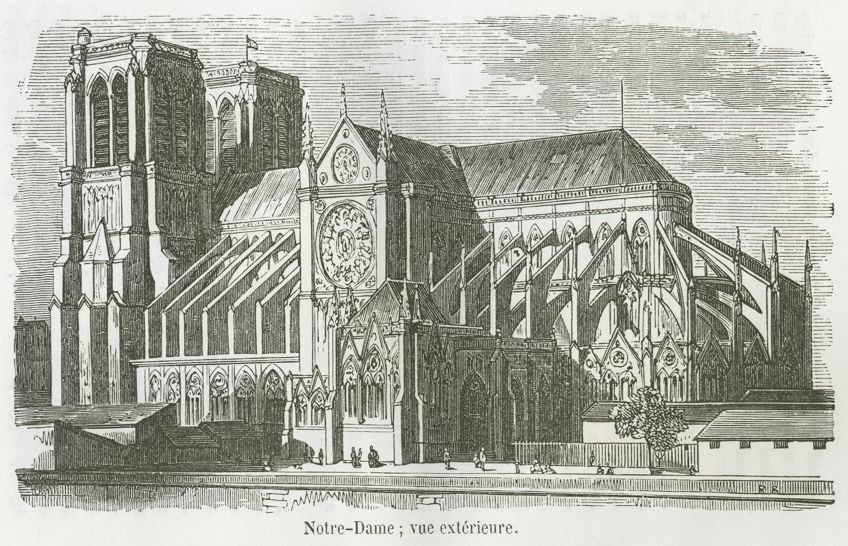 A view of the Cathedral of Notre-Dame, on the Ile de la Cité in Paris, 1855;Brown University Library, Public domain, via Wikimedia Commons
The cathedral, which was the site of Napoleon I's coronation, gained notoriety in society, as interest in the cathedral sparked after Victor Hugo'southward 1831 publication of The Hunchback of Notre-Dame. While information technology was too adjusted into many movies, the most notable adaption came from Walt Disney Pictures in 1996.
Since the cathedral's original construction, it has suffered major harm and dilapidation in the centuries that have gone by. The almost contempo destruction occurred in 2019 when a massive burn down bankrupt out in the attic of the cathedral and destroyed the 19th-century spire. Ii years since this destruction, restorations to rebuild the spire remain underway.
Literature from Center Ages Art
In addition to artworks, some iconic pieces of literature were also produced during the Medieval period. The majority of the literature coming from the Middle Ages was written past monks and religious leaders, as very few other people know how to read and write. Due to this, the available literature was incredibly religious, every bit hymns and songs most God were mostly written. Nevertheless, some leaders wrote philosophical documents almost religion, which differed slightly from the typical hymns.
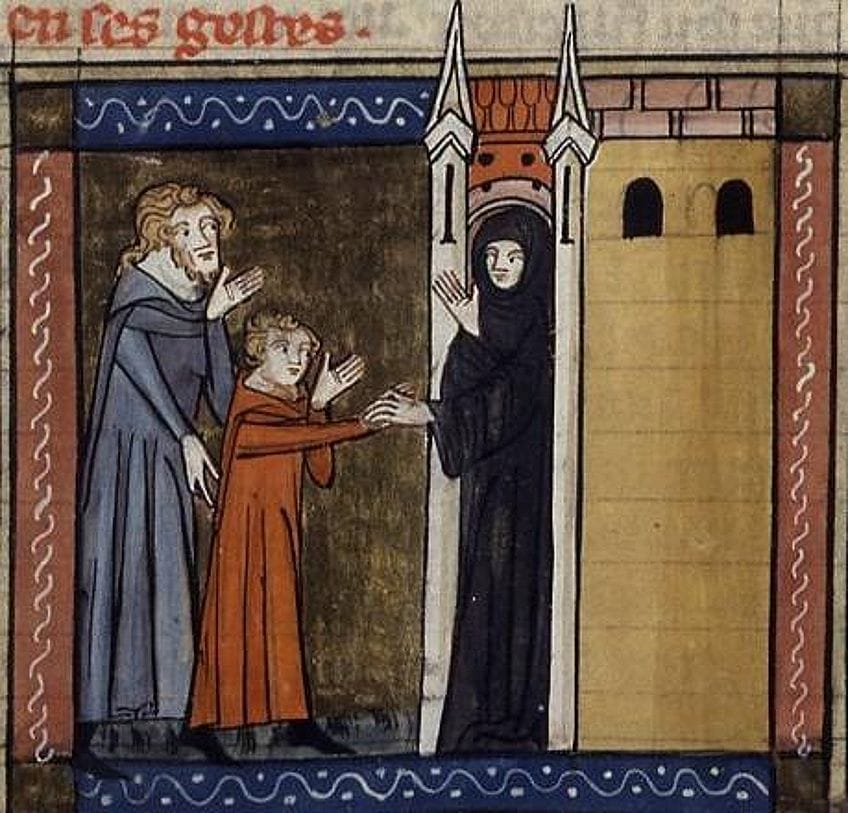 Saint Marina the Monk presented to the monastery, from Jacobus de Voragine's Legenda aurea (Golden Legend), 14th century, France;Richard de Montbaston, from Jacobus de Voragine, Legenda aurea (traduction de Jean de Vignay), French republic, Paris, Public domain, via Wikimedia Eatables
I of the about notable books coming from the Medieval era, which told stories near Saints during this time menstruation, was the Gilt Legend. The book was written past the archbishop of Genoa, Jacobus de Voragine, between 1259 and 1266. Some other secular books were written as well, but the more religious literature pieces proved to be more popular.
While faith influenced the majority of the literature produced, some famous non-religious literary works were too written. Some of these works include The Canterbury Tales past Geoffrey Chaucer and The Divine Comedy by Dante Alighieri to proper name a few. These literary masterpieces, which are nevertheless spoken nigh today, take managed to withstand the test of time and be every bit some of the nearly iconic writings that were produced during the Medieval Art menses.
The beginning of the Renaissance menses signaled an end to Medieval Fine art and saw a return to the values of classical art and a renewed understanding of the features within the Center Ages art. While the Medieval era was generally idea of every bit a dark period in history, its contribution has influenced the many different fine art styles that exist today. Due to its extensive time frame, Medieval Fine art experimented with a multifariousness of genres that helped broaden its range, which has allowed the movement to stand as evidence to the progression of art.
Take a look at our Eye Ages art webstory here!
0 Response to "Medieval Art With One Color Background Medieval Art With 2dimensional"
Post a Comment