Why Do Sunglasses Look Funny on Me
If you're looking for a practical guide on how you can find the best sunglasses for your face, you're in the right place.
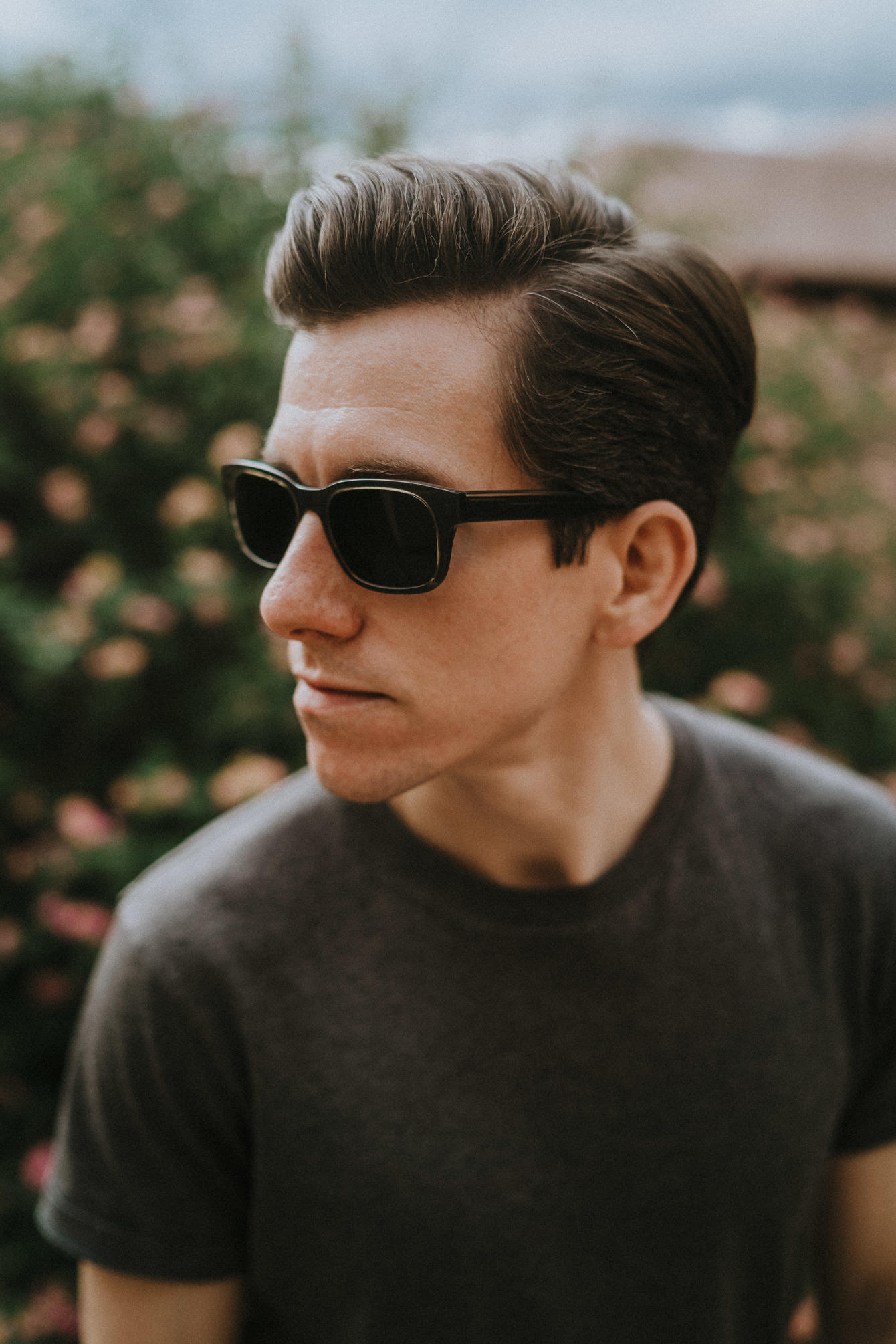
Sunglasses are extremely practical accessories. Not only do they protect your eyes from the sun's damaging rays, but they also prevent wrinkles (because you don't have to squint as much).
Plus, the right sunglasses just make you feel cool.

But the wrong ones… well, let's just say it's important to choose correctly.
Note: I used the Warby Parker home try-on program to test out a bunch of different sunglasses for this post (15 pairs, to be specific). This is a great free way to try on lots of different styles and sizes, in order to figure out what works for you.
This post is NOT sponsored by Warby Parker, but it does contain affiliate links 😉
If you want more home try-on options, check out these Warby Parker alternatives.
Watch this video to learn about an easier, more logical way to find the right sunglasses – that doesn't require you to figure out your face shape.
If video isn't your thing, read on for the text/picture version of the guide.
3 Crucial Factors for Choosing Sunglasses That Fit Your Face Shape
Finding the best sunglasses for your face doesn't have to be a daunting, mysterious process. It's actually really simple, so why does it seem so confusing?
Here's my theory – there's a lot of unhelpful advice out there. Choosing sunglasses is all about size and proportion, but most advice focuses on face shape.
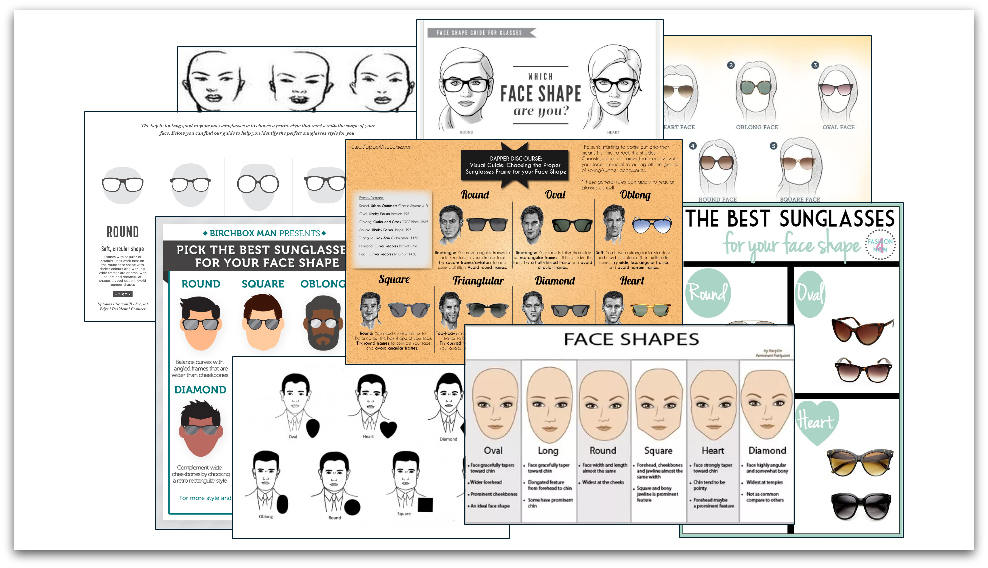
Every video, blog post and infographic I could find about buying sunglasses says you have to figure out what shape your face is, and then choose your shades accordingly.
But the thing is, our faces aren't shaped like triangles or circles. Most people don't fall neatly into one category (i.e. "heart shaped face" or "square shaped face").
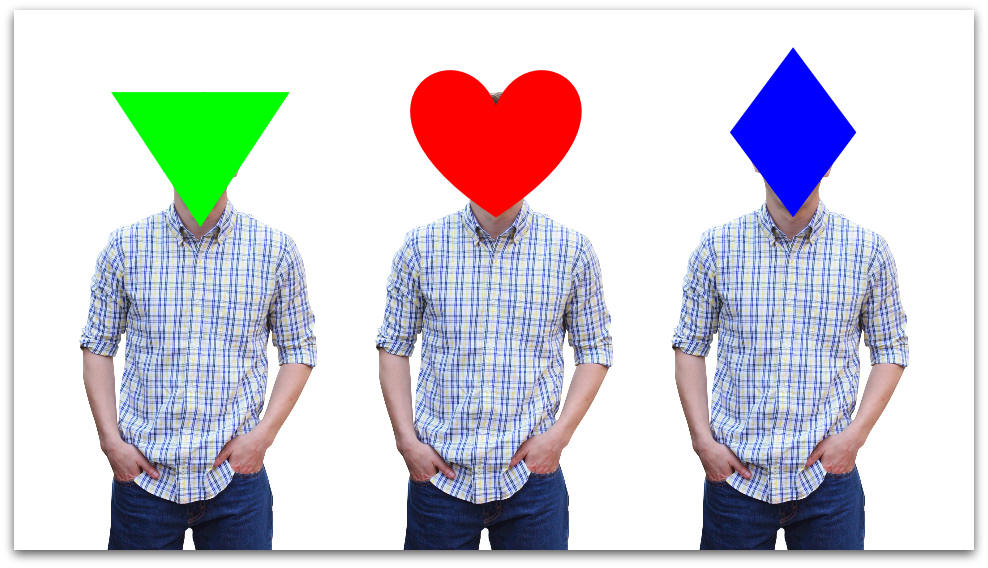
Most people are somewhere in between, which is why it doesn't make sense to try to figure out what object your face is shaped like.
That's why the face shape method for choosing sunglasses is just confusing. Let's forget about shapes and focus instead on these three things:
- Face width
- Face length
- Facial features
That's it. Every single face is a combination of these three factors.
You might have a short, wide face with round features. Or maybe you have a tall, narrow face with angular features.
Let's learn about each of the three factors.
Factor #1: Face Width
Many people wear sunglasses that are too wide for their face, which produces a bug like appearance. If you have a narrow face, it's best to wear narrow glasses.
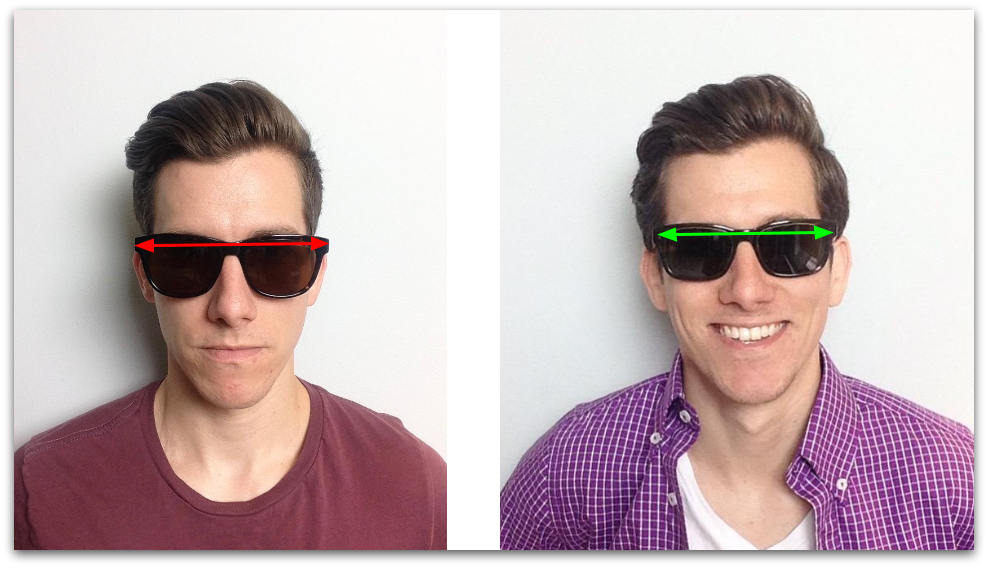
If you're wondering whether or not you have a narrow face, grab a ruler.
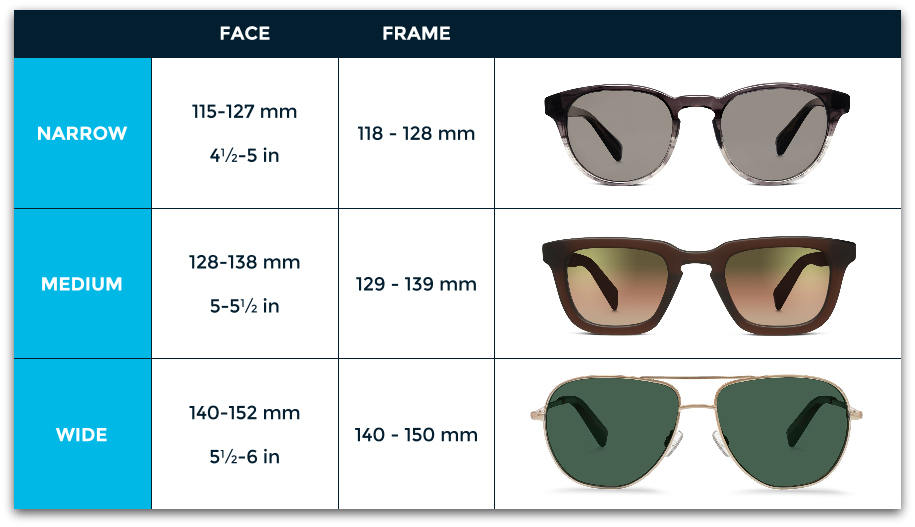
Measure across your face from temple to temple. Go straight across (don't hug the contours of your face if you're using a soft measuring tape).
Then use this table to figure out which size sunglasses are best for you:
Sometimes you won't be able to find the overall frame width, but you can usually find the lens and bridge width.
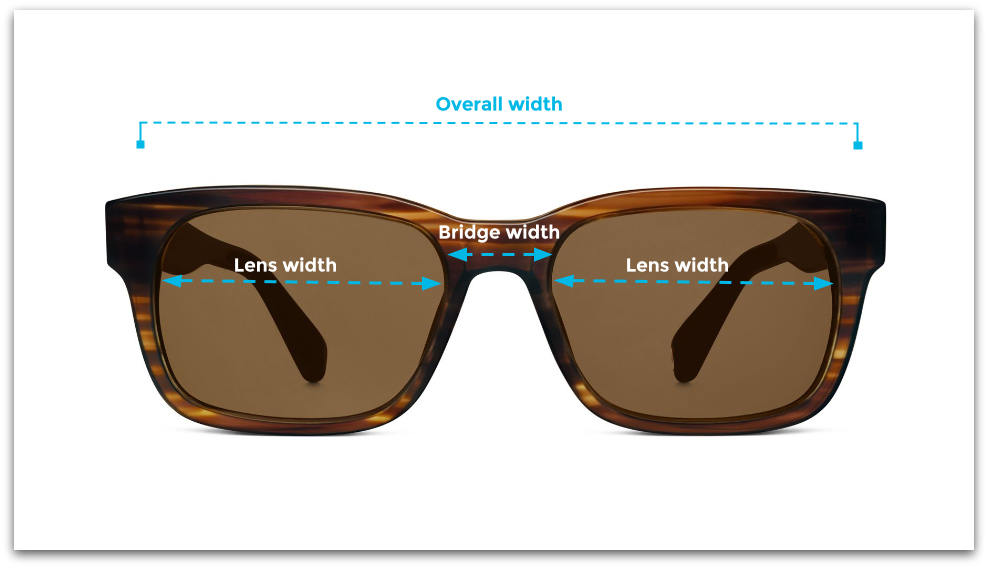
If that's the case, just add these up to get a sense of how wide the sunglasses are. Speaking of bridge width, pay attention to this dimension if you have eyes that are closer or farther apart than average:

Most people don't have to pay attention to bridge width, so if you're not sure if it applies to you, it's probably safe not to worry about it.
Let's move on to the second most important factor for finding the best sunglasses.
Factor #2: Face Length
Face length is the distance from the top of your forehead (your hairline) to the bottom of your chin.
If your face is about as wide as it is long, you have a short face. If, like me, your face is substantially longer than it is wide, you have a long face.
Here's a handy formula to figure it out mathematically:
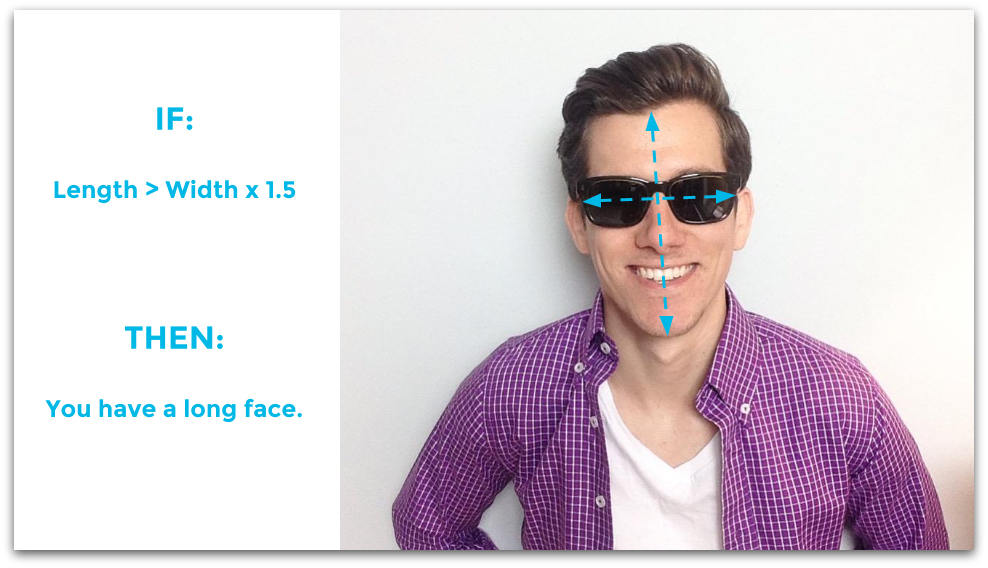
Here's how it works using my actual dimensions:
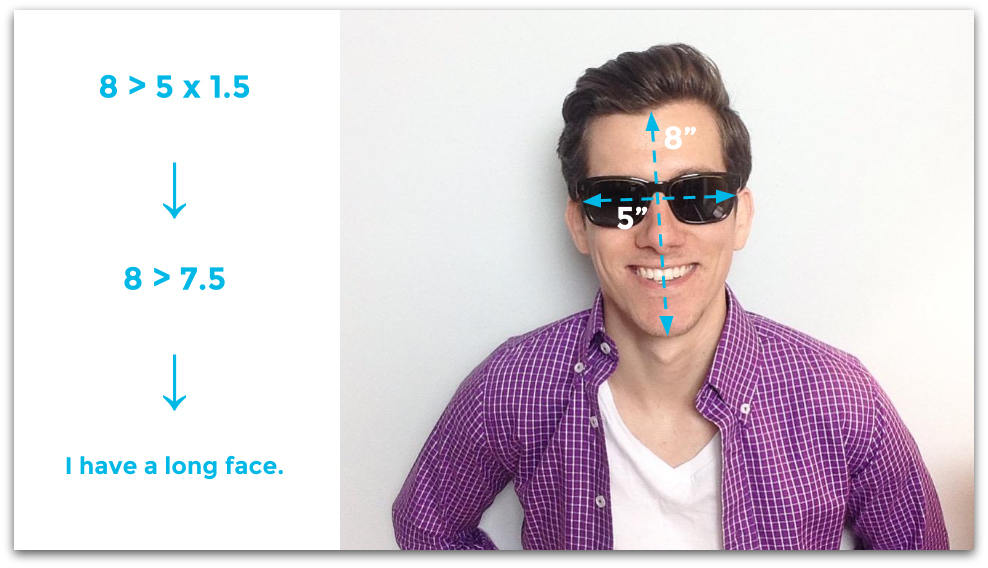
Just like with face width, the key is to wear glasses that balance out your features.
Since I have a long face, I'll need to wear long frames, or else my face will look even longer!
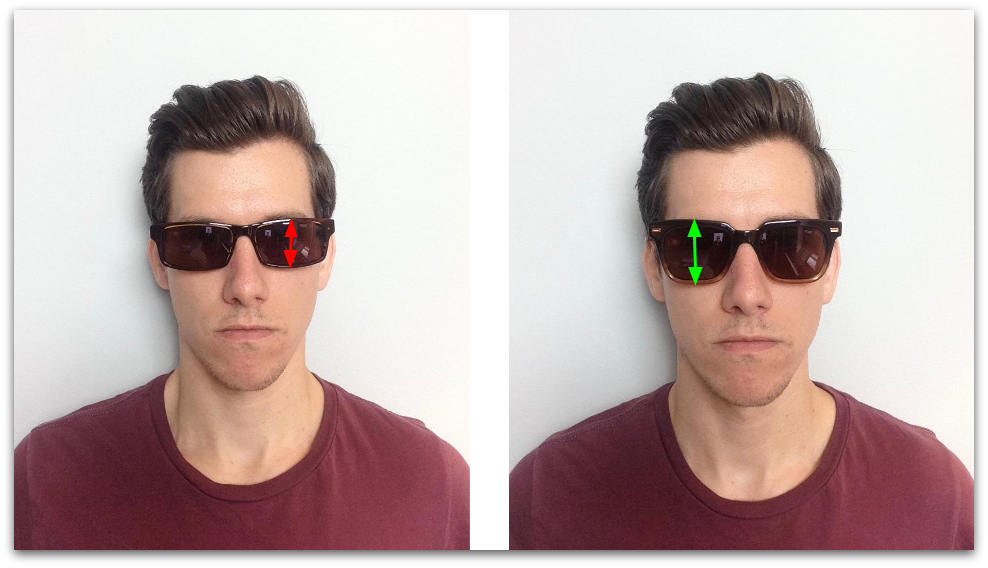
To find short or long sunglasses, you'll want to pay attention to the lens height:
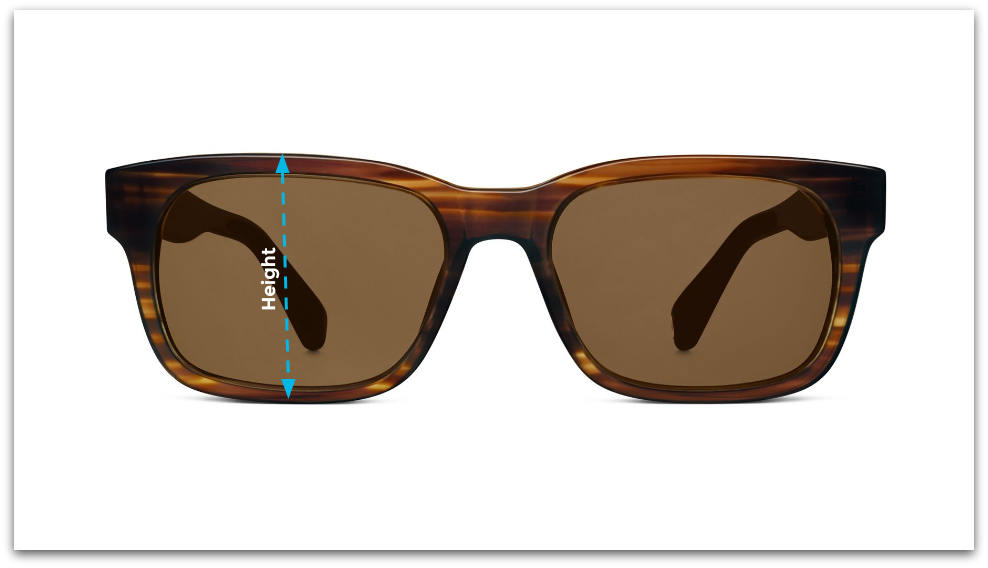
The lens it the longest (or tallest) part of a pair of sunglasses. This table will give you a sense of short vs. tall frames:
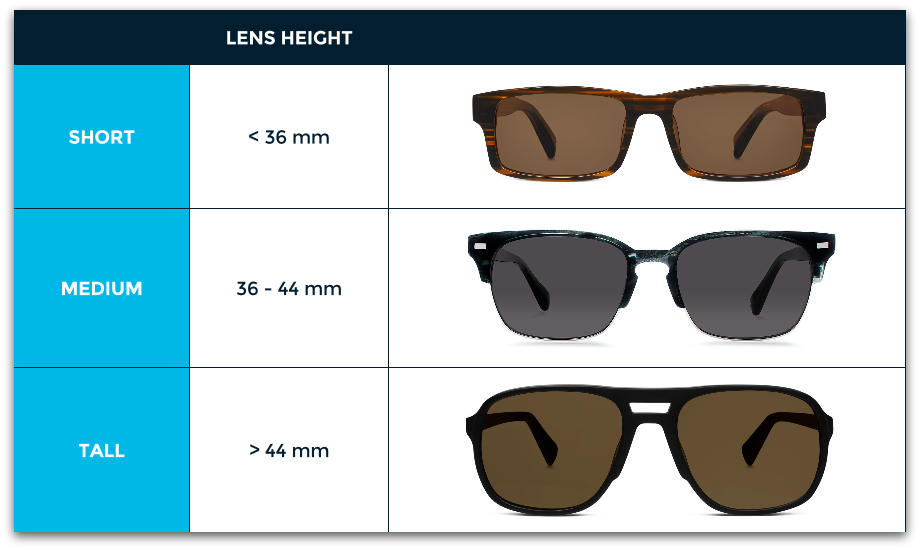
It really depends on your face, though. Taller frames won't look as tall on a long face. So you should try on as many pairs of sunglasses as you can before buying a new pair.
Factor #3: Facial Features
When people talk about round vs. square faces, they're really trying to describe the features of a face, not the overall shape (that's too simple).
Rather than thinking about your face as a distinct shape, think of it as being made up of a bunch of different lines and contours.
These lines are determined by things like bone structure and body fat percentage. Some lines are soft and curvy, while others are straight and angular.
It's a spectrum, and many faces fall somewhere in the middle:
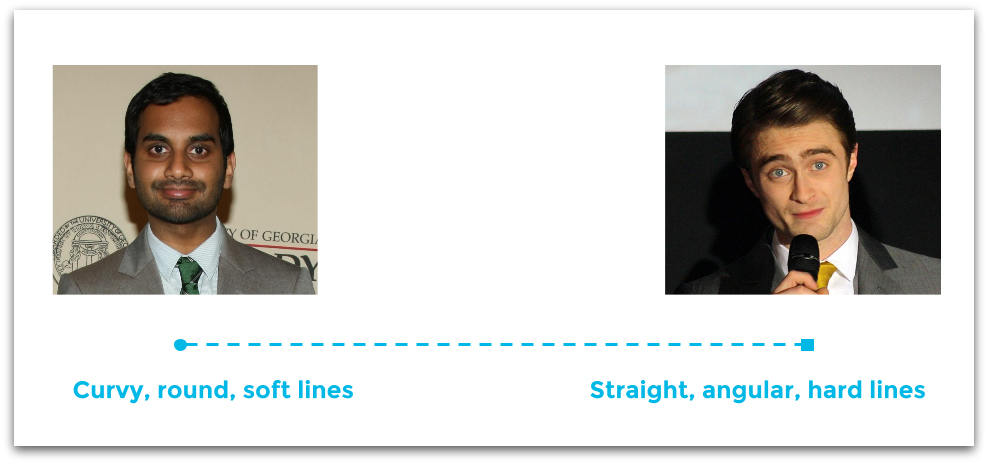
If your face isn't obviously on one side of the spectrum, you don't have to worry too much about this – you'll look good in any sunglasses that are the right size.
But if you do have obviously round or straight features, you'll want to certain types of glasses.
It's all about balance. People with overtly round features will look better in frames with straight features. This will help achieve more perceived symmetry, which is attractive.
For example, I have relatively round features, and I look best in angular frames.
Cee Lo Green is an example of a someone with very round features, which is why he looks great in sunglasses that have hard angles.

On the other end of the spectrum, you have guys like Brad Pitt who have square jaw lines and sharp features.
They look great in round frames:

It's not that Brad Pitt can't pull off more angular frames. It's that he can pull off circular frames in a way that people with softer features cannot.
Wayfarers Work for Almost Everyone
One classic sunglasses style has withstood the test of time for good reason – the Wayfarer.

These frames have the perfect mix of round and angular features, and they look good on many different types of faces.
The one problem many people have with Wayfarers is the size. They're often too wide for people with narrow faces.
But you can find narrower Wayfarer style sunglasses, such as the Warby Parker Beckett (discontinued, unfortunately).
Aviators Are Also a Safe Bet
Though not quite as universally flattering as Wayfarers, the aviator shape looks good on many different types of faces.
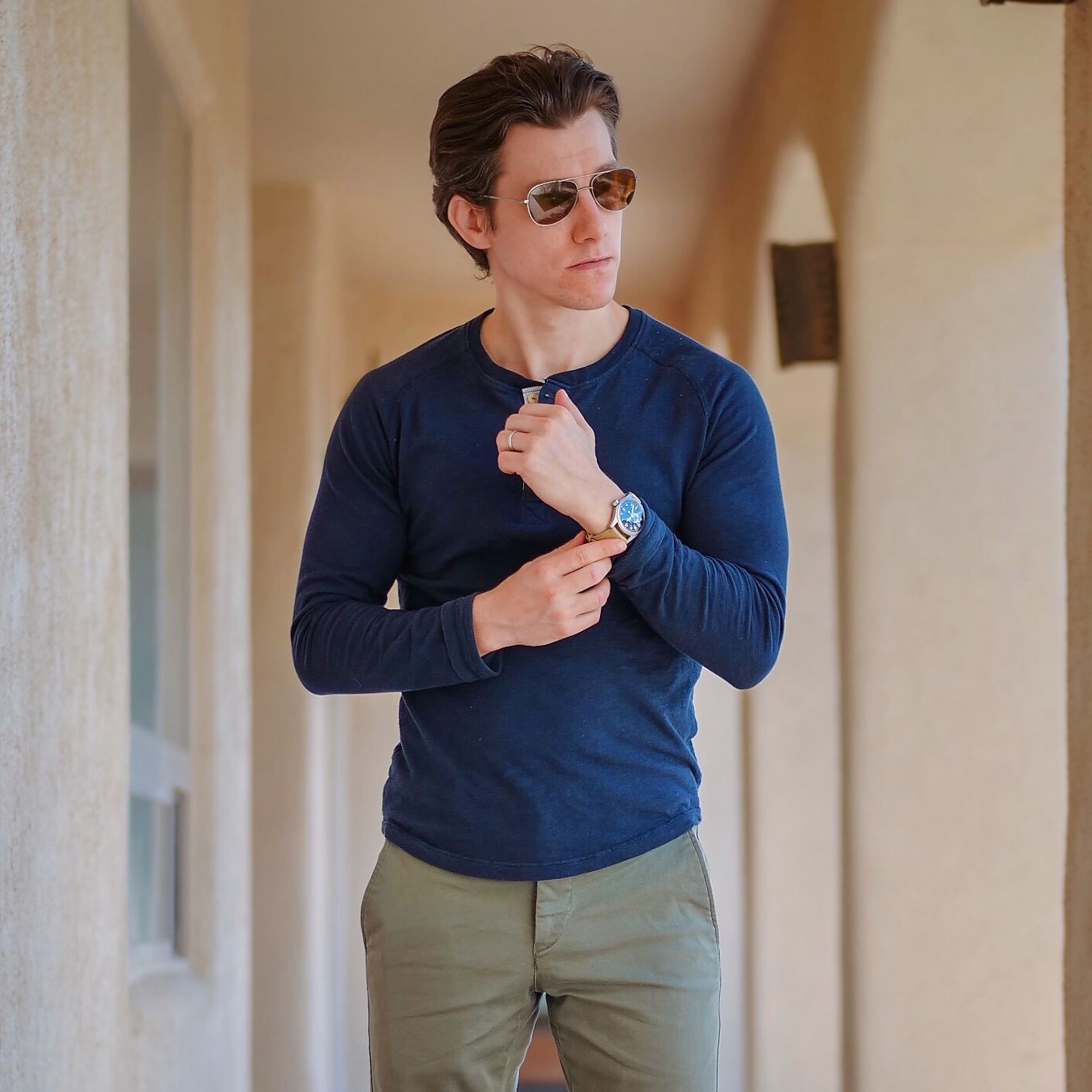
Just make sure your aviators aren't too wide, as this style tends to run large.
Questions About the Best Sunglasses for Your Face Shape
Here are the answers to some common questions about sunglasses.
How Do I Find the Right Sunglasses for My Face Shape?
The key is to wear sunglasses that fit your face (aren't too big or too small) and compliment your facial features. If you have round features, go for a more angular pair of shades to create symmetry. If you have an angular face, a round pair of sunglasses will look good.
What Are the Best Sunglasses for Round Face?
If you have a round face, an angular pair of sunglasses will look great!
Should Sunglasses Cover Eyebrows?
It's not "wrong" for sunglasses to cover your eyebrows, and most sunglasses will probably cover at least part of them.
My Advice? Try On Lots of Sunglasses
Now that you know how to pick sunglasses for your face, you need to try on a bunch of different pairs. I recommend using the Warby Parker Home Try-On program.
But there are plenty of brands offering free home try ons these days.
Make sure to measure the width of your face and try on frames that are the right width for you. That way you can maximize your home try on experiences.
Test drive a few different shapes to get a better sense of the concepts you learned from this guide.
I hope this guide helps you understand which sunglasses are the best choice for your face "shape".
Questions? Comments? Leave them below!
Source: https://www.themodestman.com/best-sunglasses-for-your-face/
0 Response to "Why Do Sunglasses Look Funny on Me"
Post a Comment